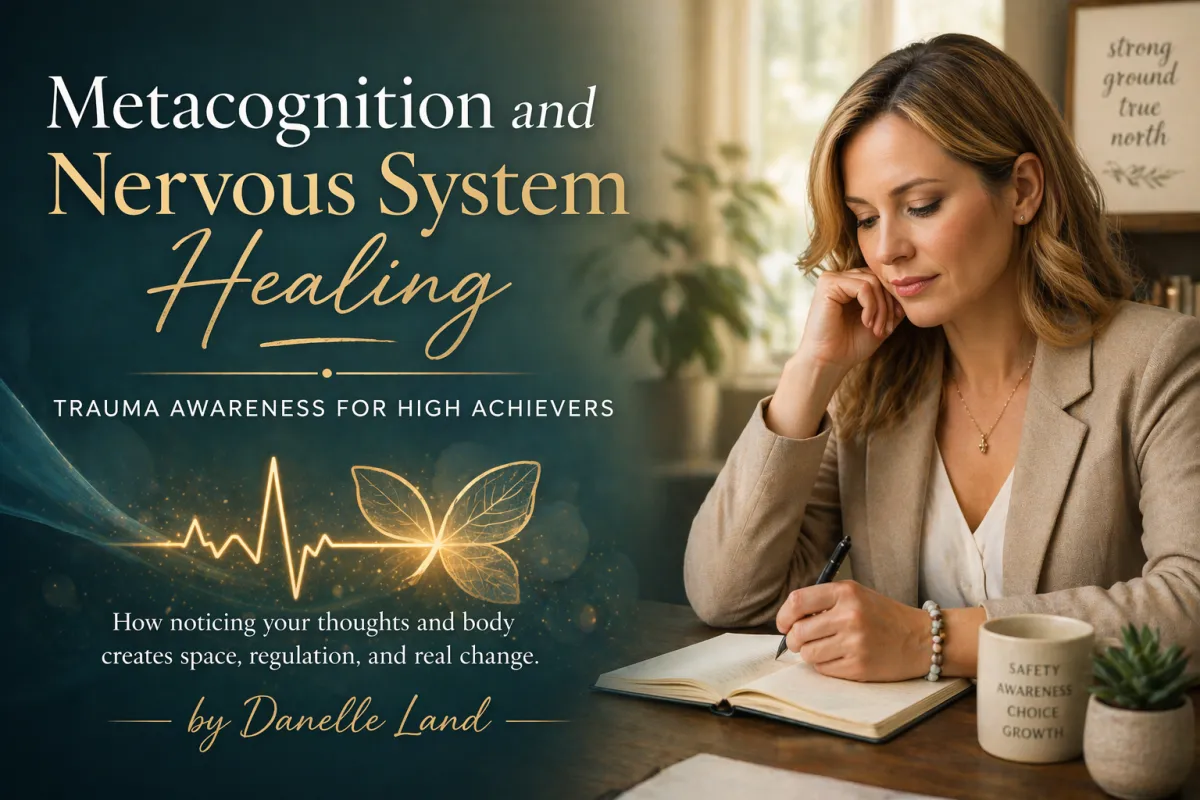
Metacognition and Nervous System Healing | Trauma Awareness for High Achievers
The Moment You Notice Yourself: How Metacognition Changes the Nervous System Story
Trauma-Informed Healing
Recently, I have been deeply studying Brené Brown’s newest work Strong Ground. Seriously, I am audio book and hard back tandem with a highlighter, kind of deep. One of the terms she uses that truly stopped me in my tracks was metacognition. I have not been able to stop thinking about it, especially in the context of trauma and the nervous system patterns so many of us live from without realizing it.
Metacognition is the ability to notice your own thinking. It is the awareness that you are reacting while you are still in the reaction. It is the moment you can feel your body tighten, hear your tone shift, sense the urge to shut down or push harder, and instead of becoming the response, you begin to observe it.
This may sound simple, but for many people, especially those who have lived through chronic stress, emotional neglect, or instability, this skill was never developed in a safe or supported way. Survival required speed. It required performance. It required adaptation. There was no pause to reflect. There was only the need to keep going.
Over time, the nervous system becomes incredibly efficient at protecting. It learns to stay alert. It learns to anticipate. It learns to override exhaustion and emotion in order to maintain control. These responses can create high achievement, strong leadership, and impressive resilience. They can also create internal pressure, emotional disconnection, burnout, and patterns that feel difficult to change even when we understand them intellectually.
This is where metacognition becomes powerful. When we begin to notice our thoughts, sensations, and emotional impulses as they are happening, we create space. That space is where regulation becomes possible. Instead of reacting automatically, we can begin to respond with intention. Instead of believing every anxious thought, we can become curious about where it is coming from. Instead of judging ourselves for feeling overwhelmed, we can recognize that the nervous system is doing exactly what it learned to do in order to survive.
Nervous system awareness and metacognition work together. Awareness allows us to recognize the signals in the body. Metacognition allows us to understand the meaning we are making from those signals. Together, they help us interrupt survival patterns that once felt permanent.
I often see this in high-functioning individuals who are incredibly capable on the outside but feel restless or emotionally tired on the inside. They can explain their behaviors. They can describe their history. Yet in moments of stress, they still find themselves overworking, people-pleasing, withdrawing, or reaching for something that temporarily numbs the discomfort. This is not a lack of intelligence or willpower. It is a nervous system that has not yet experienced enough safety to choose differently.
When we begin practicing metacognition, we start noticing the subtle moments that used to pass us by. We notice the tightening in the chest before the panic escalates. We notice the story that says we must prove ourselves again. We notice the urge to stay busy instead of resting. These moments of noticing are not failures. They are invitations.
Healing is not about becoming perfect or calm all the time. It is about building a compassionate relationship with your internal experience. It is about understanding that your reactions make sense based on what your body has lived through. When shame softens, change becomes more accessible. Regulation becomes less about control and more about safety.
Over time, this awareness begins to shift identity. You are no longer only the person who reacts. You become the person who notices. From that place, you can choose new behaviors. You can set boundaries instead of overextending. You can slow down without feeling like you are losing ground. You can stay present in conversations that once would have triggered withdrawal or defensiveness.
The moment you notice yourself is often the moment your nervous system begins learning that a different future is possible.
If you are starting to see your patterns more clearly, I want you to know this is not something to fear. It is often a sign that you are ready for a deeper level of healing and integration. Awareness is not the end of the journey. It is the doorway.
With warmth and truth,
— Danelle Land

